
Denture Relines
Your denture hasn’t changed.
Your mouth has.
If your denture feels loose, shifts when you eat, or causes sore spots, a reline is usually all it takes. Simple, affordable, and it extends the life of your denture.
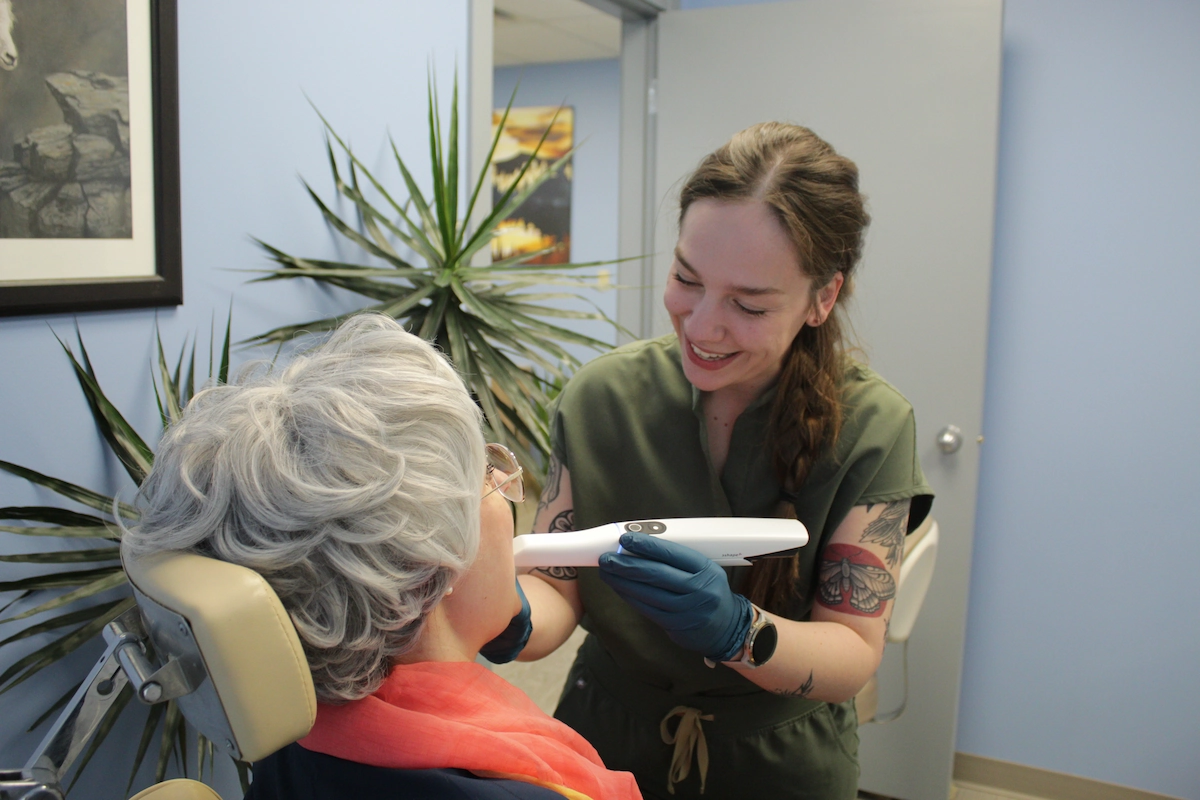
Same-Day Appointments
On-Site Lab
Free Consultations
What is a Denture Reline?
A secure fit, restored — without replacing your denture.
A denture reline reshapes the inside of your denture to match your current gum contours. Over time, your jawbone naturally shrinks — creating gaps that cause looseness, movement, and irritation. A reline fills those gaps and restores a stable fit.
Think of it as restoring your denture to how it originally felt. The teeth don’t change. Your smile doesn’t change. Only the fit does.

Impression inside your denture
Your denturist places impression material inside your denture and seats it in your mouth — capturing the exact shape of your gums today.

Lab work — done on-site
The old fitting surface is removed and replaced with new material shaped to your impression. No sending it away — everything is completed in our lab.

Fit check and fine-tuning
Your bite is checked, minor adjustments are made, and you walk out the same day with a properly fitting denture.
Your options
Three types of relines — one right answer for your situation
Not all relines are the same. The right one depends on the state of your gums and what you need long-term. Here’s how they differ — and who each is best for.
Is it time?
Signs you’re due for a reline
Most people wait too long. They adapt to looseness gradually — and don’t realize how much it’s affecting them until it’s fixed. If any of these sound familiar, a reline is likely overdue.
- Your denture moves or shifts when you eat or talk
- You're using adhesive just to get through the day
- Food is getting trapped underneath
- You have sore spots or redness along your gum ridge
- You hear clicking when you talk
- You're avoiding certain foods
- Your face looks more sunken around the mouth
Reline vs. replacement
How to know which one you actually need
A reline is appropriate when your denture is structurally sound — the base isn’t cracked, the teeth aren’t severely worn, and the overall dimensions are still correct. You’re updating the fit to your current anatomy. Replacement becomes necessary when the denture itself has reached the end of its life. A free consultation will tell you clearly which situation you’re in.
Why it Happens
Your mouth changes every year. Your denture doesn’t.
Natural tooth roots constantly stimulate the jawbone, signalling the body to maintain bone density. Once the teeth are gone, that signal disappears — and the bone begins to shrink. It’s called bone resorption, and it’s unavoidable.
Change is fastest in the first year after extraction, but it continues slowly for life. Your gum tissue shifts with it. Your denture, custom-fitted at one point in time, doesn’t adapt — and over months and years, small gaps open up between the denture base and your gum ridge.
A loose denture isn’t just uncomfortable — it makes things worse over time.

Accelerated bone loss
A well-fitting denture distributes bite forces evenly, slowing bone resorption. A loose denture rocks and shifts, creating pressure points that speed up bone loss in those areas. The longer you wait, the harder future fitting becomes.
Tissue damage
Constant movement against gum tissue causes friction, irritation, and chronic sore spots. Left unchecked, this can lead to inflammation, ulcers, or infection — all of which need to be resolved before a reline can be done.
Reduced nutrition
Loose dentures mean reduced chewing efficiency. People avoid harder foods — meats, raw vegetables, fruits — and over time, that quietly affects nutrition, particularly in older adults.
Facial collapse
Dentures support the lower third of your face. As fit deteriorates, so does that support — leading to a sunken, aged appearance that worsens over time.
Common questions
What people usually ask us
How long does a reline take?
A hard reline typically takes about half a day. You come in in the morning, we complete the impression, and our on-site lab does the work while you go about your day. You pick up your denture in the afternoon. We don't send your denture away — everything is done right here. Soft relines follow a similar timeline. Tissue conditioners can sometimes be done in a single appointment.
Will my denture look different afterward?
No. Only the interior fitting surface is modified — the part that contacts your gums. The appearance of the teeth and the shape of the denture don't change.
Can I just use more adhesive instead of getting a reline?
Adhesive is a short-term tool, not a fix. Long-term reliance on adhesive masks a fit problem that's continuing to get worse underneath — and often accelerating bone loss in the process. A reline is the correct solution. We see a lot of patients who spent years on heavy adhesive when a single reline would have sorted it.
Can I get a reline on a partial denture?
Yes. Partial dentures experience the same gum changes as full dentures and benefit from relining on a similar schedule — typically every 1–2 years, depending on how your mouth has changed.
My denture is old. Is it worth relining, or should I just replace it?
It depends on the overall condition. If the teeth aren't severely worn and the base is structurally sound, a reline is almost always worth it — and significantly cheaper than replacement. If the denture has been relined two or three times already, or the teeth are quite worn, we'll tell you honestly that replacement is the better investment. We won't recommend a reline if it's not the right call for you.
How do I know if I need a hard or soft reline?
Your denturist will assess your gum tissue and make a recommendation. In general, patients with tender, thinned, or sensitive gum tissue are better candidates for a soft reline. Most other patients do well with a hard reline. We'll walk you through the reasoning so you understand the choice.
What if my gums are really sore and inflamed right now?
If your gums are significantly inflamed, we may start with a temporary reline (tissue conditioner) first. This lets your gum tissue recover and return to a healthier, more stable shape — which is necessary before we can take accurate impressions for a permanent reline. It's a two-step process when needed, and we'll be clear about what to expect from the start.
Free consultation
Not sure if you need a reline?
Come find out.
A free consultation is the easiest way to find out.
We’ll assess your fit and let you know exactly what’s going on — no pressure, no commitment.