
Keeping your dentures clean is important for more than just appearance.
Proper cleaning helps prevent stains, bad breath, plaque buildup, irritation, and damage to your dentures.
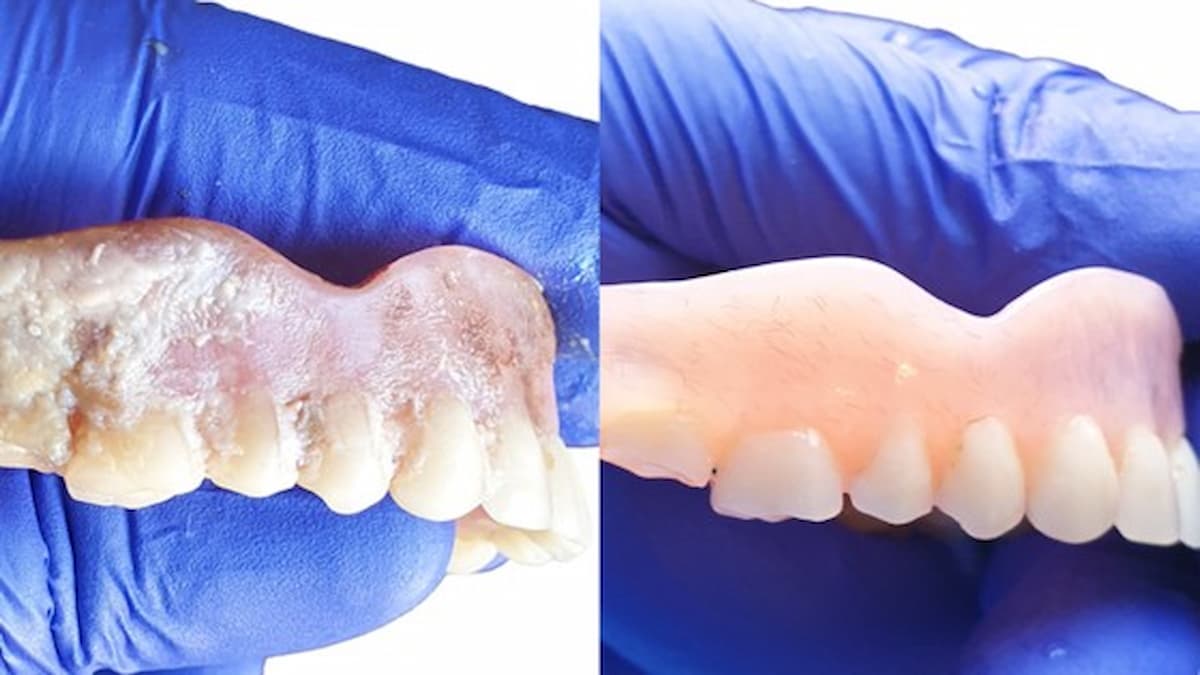
Fortunately, taking care of dentures is fairly simple.
How to clean your dentures
1. Rinse Your Dentures After Eating
Whenever possible, remove your dentures and rinse them under running water after meals. This helps wash away loose food particles before they become trapped underneath the denture or stuck around the teeth.
Be careful when handling your dentures. They can crack or break if dropped. Cleaning them over a folded towel or a sink partially filled with water can provide some protection.
2. Brush Your Dentures Every Day
Dentures should be brushed twice every day.
Use:
- A soft denture brush or soft-bristled toothbrush
- A denture-specific cleaner, mild liquid soap or non abrasive toothpaste
- Cool or lukewarm water
Brush all surfaces of the denture, including the teeth and the portion that sits against your gums.
Avoid brushing too aggressively. Scratching the denture surface can make it easier for plaque and stains to accumulate.
3. Avoid Abrasive Toothpaste
Some toothpastes can be too abrasive for dentures.
Over time, abrasive particles can create tiny scratches in the denture surface, making it easier for plaque, stains, and bacteria to build up. These scratches can also leave dentures looking dull instead of smooth and polished.
4. Clean Your Mouth Too
Cleaning the denture is only half of the job.
After removing your dentures, gently clean your:
- Gums
- Tongue
- Roof of your mouth
- Remaining natural teeth, if applicable
A soft toothbrush works well for most people.
Cleaning your mouth helps remove plaque and bacteria and gives you an opportunity to check for sore spots or irritation.
5. Avoid Household Cleaners and Harsh Chemicals
Do not clean dentures with products such as:
- Bleach unless specifically recommended for your denture
- Household cleaning products
- Abrasive powders
- Very stiff brushes
- Hot or boiling water
These products can damage the acrylic, affect the colour of the denture, or damage metal components found in some partial dentures.
If you have a partial denture containing metal, make sure any soaking product you use is compatible with metal components.
6. Remove Denture Adhesive Thoroughly
If you use denture adhesive, remove the remaining adhesive from both your mouth and your dentures every day.
Persistent reliance on large amounts of adhesive can sometimes be a sign that your dentures no longer fit as well as they should.
If your denture continually moves, drops, or requires increasing amounts of adhesive, it may be time to have the fit checked.
7. Have Your Dentures Professionally Cleaned
Even with excellent home care, dentures can gradually develop stubborn stains, tartar, and buildup that are difficult to remove safely at home.
A denture clinic can professionally clean and polish your dentures without using abrasive household methods that could damage them.
Professional cleaning can make a noticeable difference in both the appearance and feel of an older denture.
FAQ
How Often Should Dentures Be Cleaned?
A good routine is:
- Rinse after meals when possible
- Brush thoroughly twice every day
- Clean your mouth every day
- Have stubborn buildup professionally cleaned when needed
What If Your Dentures Still Smell or Look Dirty?
Persistent odour, staining, or buildup may indicate that your dentures need a professional cleaning. It can also happen when the surface of an older denture becomes worn or scratched.
You should also have your dentures checked if you notice:
- Persistent sore spots
- A loose or unstable denture
- Difficulty chewing
- Cracks or broken teeth
- Significant staining or tartar buildup
- Changes in how your bite feels
Need Help With Your Dentures?
Proper daily cleaning can help your dentures stay comfortable, fresh, and looking their best. However, dentures and your mouth both change over time.
Regular denture checkups allow your denturist to inspect the fit, your bite, the condition of the denture, and the health of the tissues underneath it.
If your dentures are becoming difficult to clean, uncomfortable, or loose, contact your denture clinic to have them assessed.